
SEAFOOD
Salmon – Teriyaki
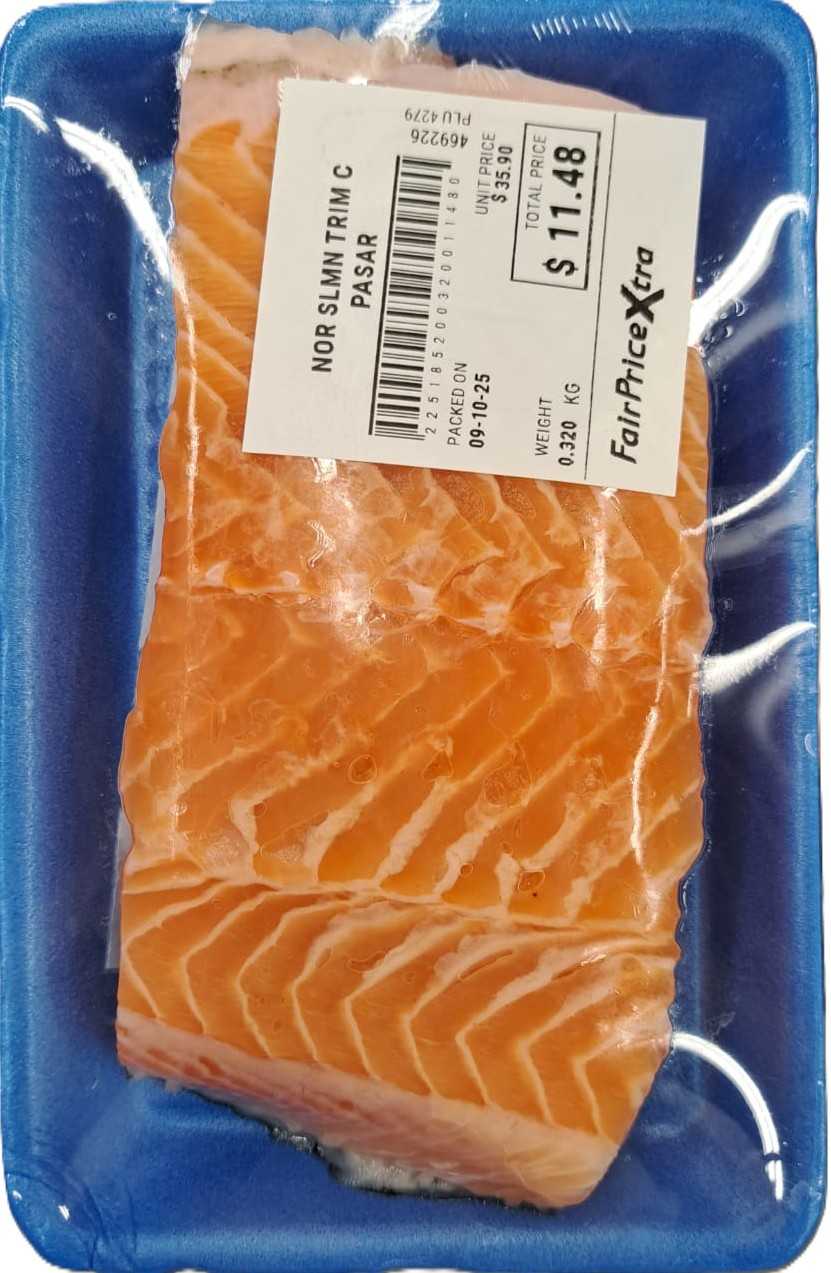
Example of salmon fillet
Serving size 4 pax
| s/n | Item | Qty | Unit | Unit Cost | Qty per unit | Cost per 100g | Net Cost |
| 1 | Salmon FIllet | 2 | pc | 11.50 | 320 g | 3.59 | 23.00 |
Ingredients
Teriyaki sauce, self made, as below->
1. Soy sauce – 2 tbsp
2. Sake – 2 tbsp
3. Mirin – 2tbsp
Mix 1 to 3
4. Sugar – 1 tbsp, add during heating the mixture
Instructions
1. Cut fillet across into half, and about 1/2 inch thick pc
One fillet can make 6 pcs
Alternatively, you can leave it as whole fillet
Cut into thinner piece is easier to pan fry
Or you can buy from Donki which ready cut (but more expensive)
2. Slightly coat with potato flour or plain flour. Potato flour gives a more crispy texture
3. Pan fry till golden brown if you more crispy. Use medium heat
4. Remove from pan. (You can add teriyaki sauce immediately without cleaning the pan, but reduce to medium low heat)

Salmon – Steam with Miso
Example of Salmon fillet
Serving size 4 pax
| s/n | Item | Qty | Unit | Unit Cost | Qty per unit | Cost per 100g | Net Cost |
| 1 | Salmon FIllet (or other fish) | 2 | pc | 11.50 | 320 g | 3.59 | 23.00 |
| 2 | Shimeji Mushrooms | 1 | pack | 1.75 | – | – | 1.75 |
| 3 | White Button Mushrooms | 1 | pack | 3.50 | – | – | 3.50 |
| 4 | White Cabbage (few leaves) | 3 | – | – | – | – | – |
| Total | 28.75 |
Ingredients
Miso – 1-tbsp
Sake – 2 tbsp
Sugar – 1 tsp
Mirin – 1 tbsp
Sesame oil – 1 tsp
Grated ginger – 1 tsp
Grated Garlic – 1 tsp
Instructions
1. Cut each fillet into 6 piece, sprinkle with little salt, leave to season for 15-30 mins
2. Mixed thoroughly the ingredients
3. Tear cabbages roughly bite size
4. Cut the roots part of shimeji mushrooms, break the bunch loosely
5. Cut the button mushrooms into half or quarter depends on the size
6. Choose a large plate, about 26cm, deep enough to hold some liquids during steaming
7. Brush some oil on the plate, lay the cabbages, follow by mushrooms. Spread little mixtures on top
8. Next, place the salmon. Spread the balance of the mixtures on the salmon evenly
9. You may want to cover with baking paper to prevent steam droplets or leave it
10. Steam for about 15 mins at high heat
Meat
Pork Ribs – Miso Steam
Serving size 1 kg of pork ribs
| s/n | Item | Qty | Unit | Unit Cost | Qty per unit | Cost per 100g | Net Cost |
| 1 | Pork Ribs | 1 | kg | 20.00 | – | – | 20.00 |
| Total | 20.00 |
Ingredients
Sauce mixtures – :
Grated ginger – 2 tsp
Grated garlic – 2 tsp
Miso – 2 tbsp
Mirin – 2 tbsp
Sesame oil – 1 tbsp
For steaming – :
Olive oil / cooking oil – 1 tbsp
Cornflour – 2 tbsp
Sesame oil – 1 tsp
Seasoning – :
Sake – 2 tbsp
Salt sprinkle
Washing – :
Normal plain flour
Instructions
1. When buying pork ribs, tell them it’s for steaming so they will select the correct type of ribs and chop into bite-sized pieces
2. Preparing the ribs -:
i) Using a big bowl, add normal flour and little water(feel starchy), mix them thoroughly, leave it for 30 mins then wash with water until the ribs are clear of flour
ii) Transfer to a strainer to remove excess water
iii) Once dry (pat dry) sprinkle little salt evenly, mix with sake and leave in fridge for 30 mins
iv) When ready for steaming, transfer to a bowl, mix thoroughly with cornflour, then olive oil or cooking oil
v) On a serving plate, spread them evenly, not to overlap the ribs vi) Spread the sauce mixtures on top, evenly, add more sesame oil if needed
vii) Covers with baking paper, steam at high heat for 35 mins
Pork Belly – Red Braised (Hong Shao Rou)
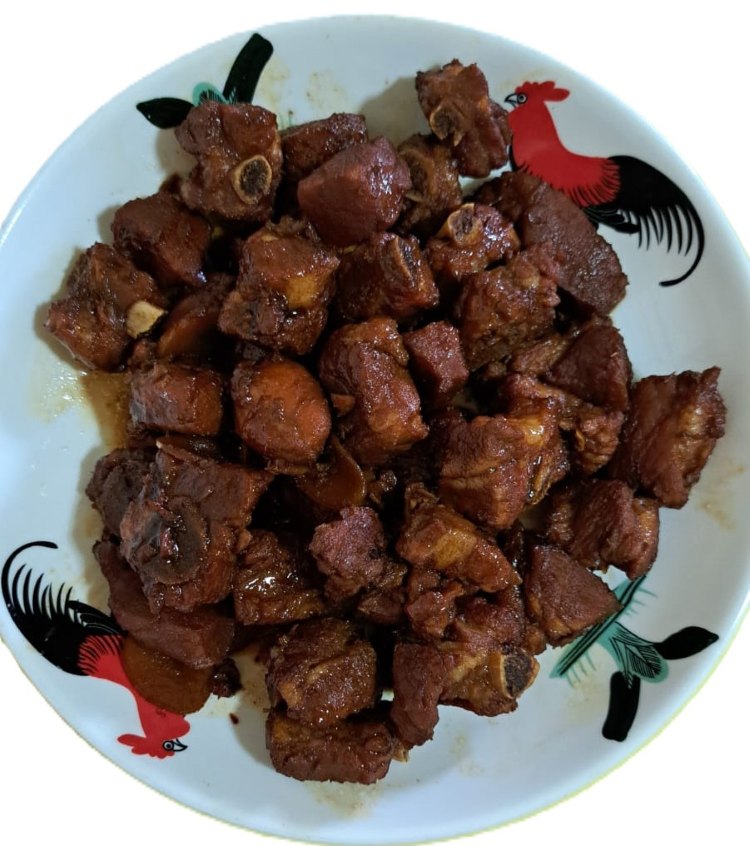
Serving size 500g
| s/n | Item | Qty | Unit | Unit Cost | Qty per unit | Cost per 100g | Net Cost |
| 1 | Pork Belly | 500 | g | 2.00 | – | – | 10.00 |
| Total | 10.00 |
Ingredients
Rock sugar…3 tbsp
Soy sauce…3 tbsp
Sake…3 tbsp
Dark Soy…1 tbsp
Ginger…few slices
Garlic….3-4 cloves
Cinnamon stick…1pc
Star Anise…3-4 cloves
Instructions
1. The pork belly should be slightly bigger, about 3/4 inch square. Preboil for 15 minutes, let it cools then cut
— Or if they can cut, let them know you want to braise. Preboil the meat till starts to boil. Remove and clean
2. Pound the rock sugar so that it is easier to caramelise
Pour the sugar into pan, add some oil and water
At medium heat, bring to boil and sugar starts to dissolve. When bubbling, reduce to low heat. Keep stirring until it becomes golden redish. Check not to ‘burn’
When pan starts to smoke, pour boiling water, about 1 cup 250ml. (The water should look redish)
3. Put star anises, cinnamon stick, and garlic into a tea bag so that it is easier to remove
4. In a stew pot, put tea bag in the bottom, then meat and gingers. Pour in the sugar water. Add more water such that it slightly below the top layer of the meat
5. Bring to boil, then simmer for 40-45 minutes. Add more hot water if needed
6. For the last 5 minutes, see that the liquid is reduced. Us spatula, mix the liquid and meats. At this time, the liquid should be ‘starchy’. The purpose is to coat the meats. If there is too much liquid, use high heat to evaporate it